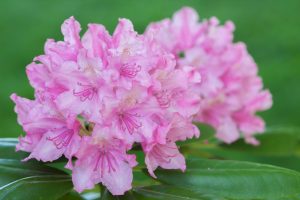
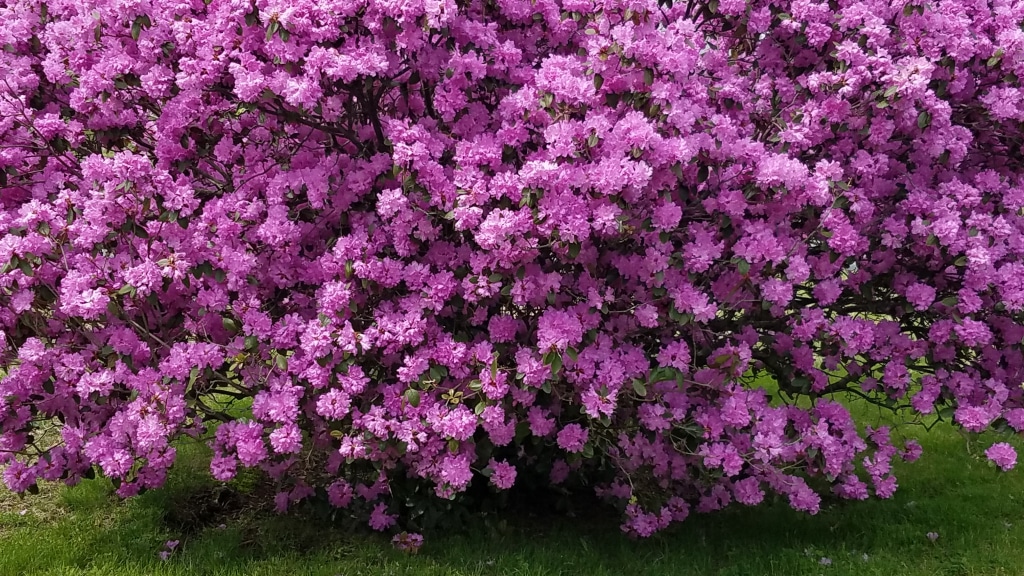
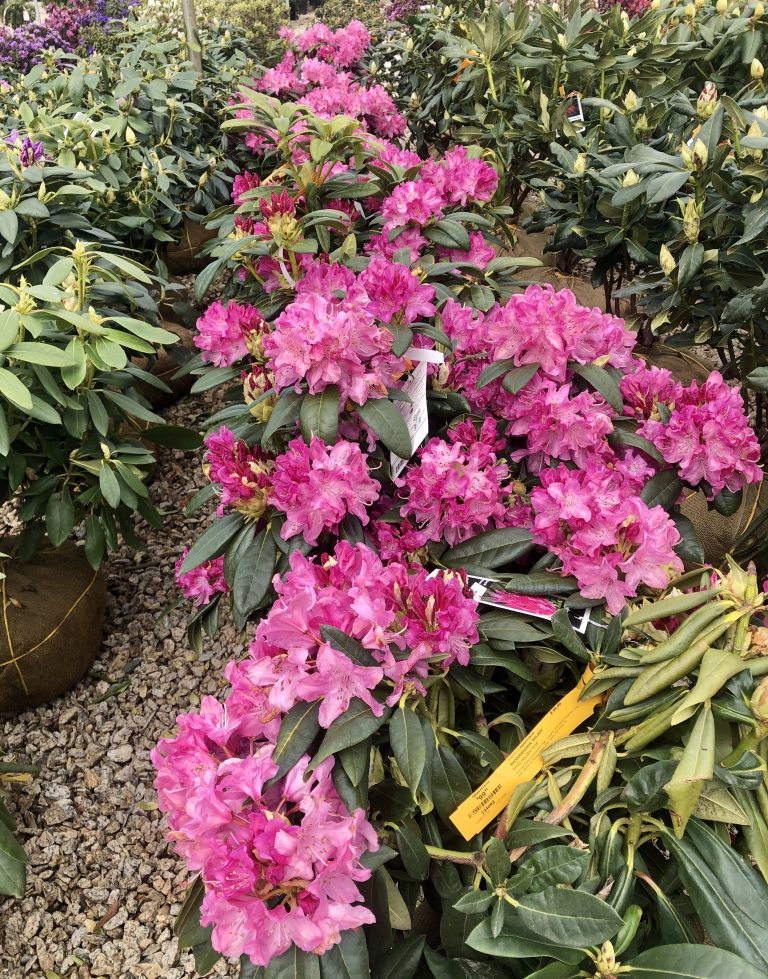
Rhododendron is a genus of 900 plus species of both evergreen and deciduous flowering shrubs and is one of the largest genera of woody plants in the world. This genus broadly encompasses what we commonly call rhododendrons and azaleas. All azaleas are technically “rhododendrons” but not all rhododendrons are azaleas. Azaleas, for most of us, are often perceived as being compact, May-flowering semi-evergreen shrubs with small flowers. To readily distinguish between rhododendrons and azaleas in bloom, simply count their stamens. Azalea flowers have five stamens, or one per flower-lobe, while rhododendron flowers have 10 (or more) stamens or two per lobe. Azaleas also tend to have tubular or funnel-shaped flowers, while rhododendron blooms are generally more bell-shaped. However, even for expert horticulturists, readily distinguishing between unfamiliar species or hybrids of rhododendrons and azaleas can be vexing.
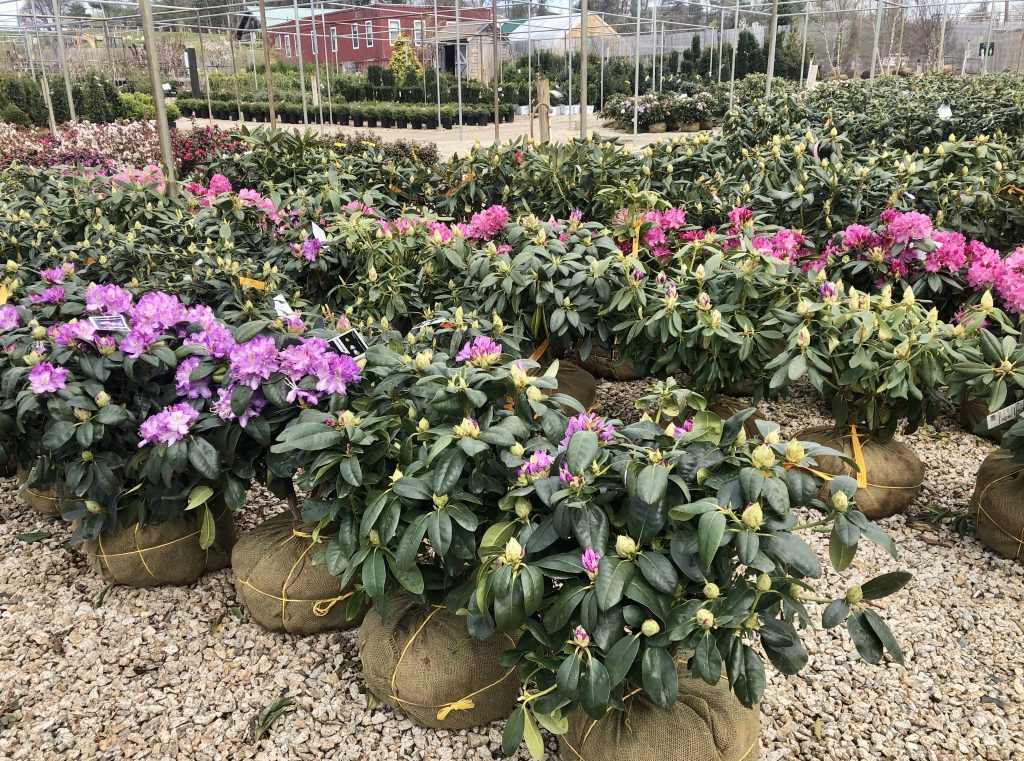
In the northeastern USA, when we refer to rhododendrons, most everyone envisions plants like our native large-leaf rhododendrons and a wide selection of large-leaf hybrid cultivars.
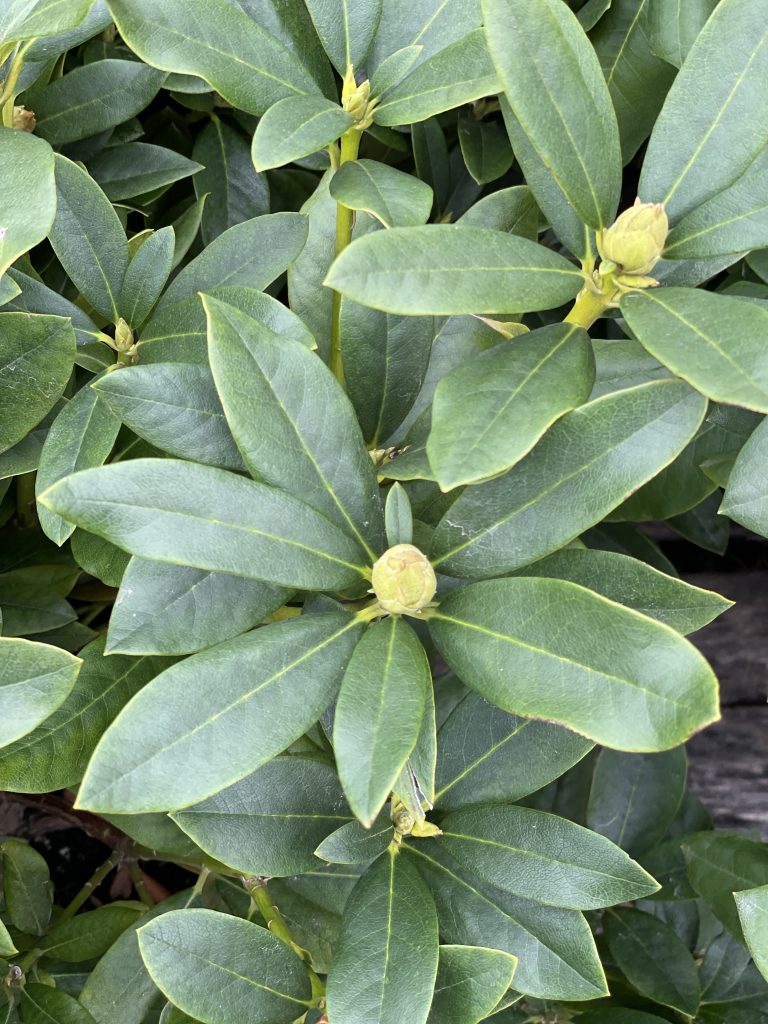
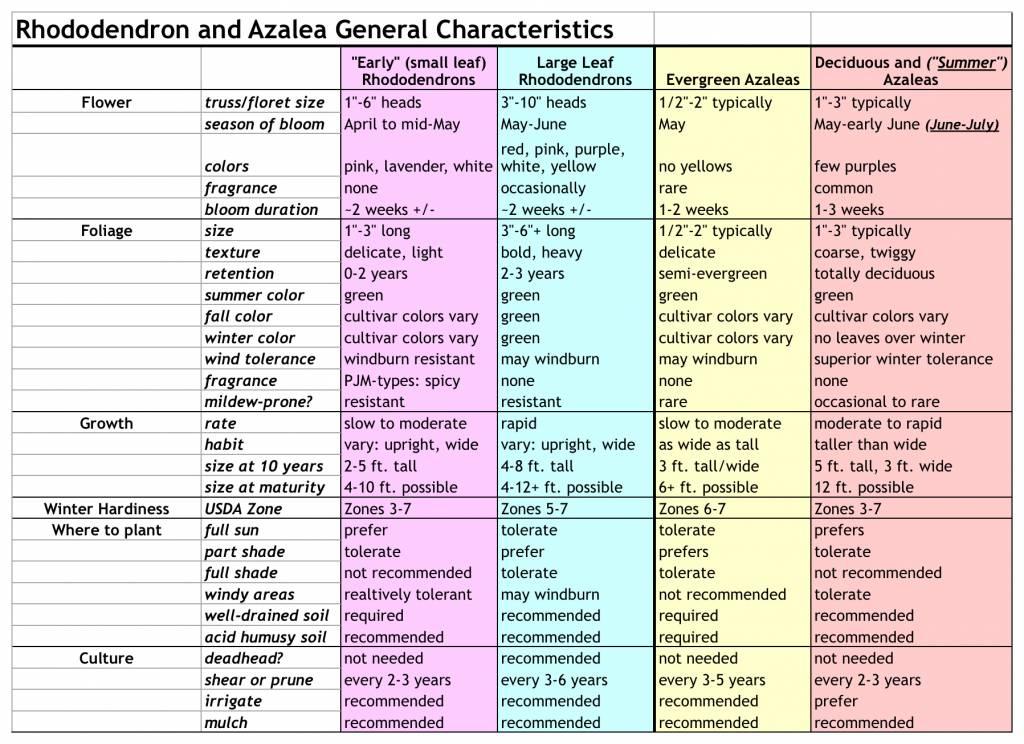
Technically, rhododendrons are classified into two groups: “lepidote” or “elepidote”. Lepidote rhododendrons generally have small leaves and they always have tiny scales on the undersides of their leaves. Conversely, the elepidote rhododendrons usually have larger leaves with smooth undersides, and they lack leaf-scales. These technical classifications can be confusing to the lay public, so it may be easier to think of them as large leaf rhododendrons or small leaf or “early” rhododendrons. So-called “early rhododendrons” are those that typically bloom in Hopkinton before Mother’s Day, and compared to most large-leaf rhododendrons, they grow more slowly, have a smaller stature, bloom earlier and prefer sunnier locations. Large leaf rhododendrons generally bloom from mid-May through June.
General Information and Care:
Rhododendrons offer tremendous variety in color, shape and size–the result of centuries of hybridization, improving flower color, hardiness and bloom time. Weston Nurseries has been raising and introducing new varieties for seventy-five years, including our first introduction, the well-known rhododendron PJM. This unique rhododendron is widely known for its early bloom, bright flower color and distinctive foliage, as well as its ability to thrive in the harsh New England climate. Rhododendrons are easy care plants that will thrive for decades if simple requirements are met.
Soil and Moisture:
Rhododendrons prefer acidic soil, high in organic content, that drains well. Since they are shallow rooted, it is easy for them to dry out and, at the same time, they can “drown” if over-watered. Sandy or dry soil, as well as heavy clay, should be amended before planting by adding peat moss, peat humus or compost. Mulch helps retain moisture, control weeds, and cool the soil.
Sun:
Large-leaf rhododendrons prefer partial shade and protection from harsh summer and winter sun as well as wind. Planting them in an eastern or northern exposure is preferable to western or southern. However, a southern exposure can work if it is shaded, the soil is rich, and the plant is protected from wind. Many tolerate deep shade, although they may become leggy and may not flower as heavily. Flowers appear in mid to late May and some bloom as late as mid-June. Small-leaf rhododendrons prefer full sun and become leggy if planted in shade. They tolerate harsh sun and wind better than their large leaf relatives and bloom earlier in the season, some beginning as early as mid-April.
Fertilizer:
Rhododendrons require minimal supplemental feeding. Holly-Tone or any other balanced fertilizer for acid loving plants can be applied each spring. Do not over-fertilize.
Pruning and Deadheading:
Removing spent flowers promotes new growth. Rhododendrons rarely require pruning, but if necessary should be pruned right after flowering. Pruning later can interfere with the next year’s flower bud development.
Winter Protection:
Planted in the proper location, rhododendrons do not require winter protection. In some locations, however, rhododendrons, particularly large leaf types, do benefit from winter protection. If the site receives full sun and/or the site is windy, an application of an anti-dessicant spray such as Wilt-Pruf may reduce winter leaf damage. Assuring the soil around roots is adequately moist before winter is important.
Problems:
- Deer enjoy browsing on rhododendron foliage and buds so depending on where you live, you may need to protect your rhododendrons from deer damage. Deterrents such as foliar sprays and scent barriers, as well as heavy duty plastic netting can be used to prevent damage.
- Only a few insects bother rhododendrons: black vine weevils, Rhododendron borers and lacebugs. The weevils are nocturnal and chew holes in the leaves; the larval form eats the roots. Borers chew through the stems of the plant causing dieback. Lacebugs feed on the undersides of the leaves causing them to turn grayish. All these can be managed with insecticides and proper cultural practices.
- Several fungal diseases attack Rhododendrons, but well drained soil and proper maintenance will help prevent them. Phytophthora root rot causes leaves to curl and brown and appear dry even when the soil has sufficient moisture. Phytophthora becomes active when the soil stays too damp for extended periods of time; proper drainage helps prevent it. Leaf spot fungus appears as brown circles on the leaves. Because wet weather and overhead-watering create the proper climate for this fungus, irrigating with a soaker hose instead of sprinklers can reduce the problem.