Weston Nurseries Garden Guidelines
Many homeowners enjoy the rewards of growing fruit-bearing trees, and the apple is one of the most popular fruit trees in New England. Properly managed, apple trees enhance the beauty of your landscape and also provide your family with fresh, homegrown fruit for years to come.
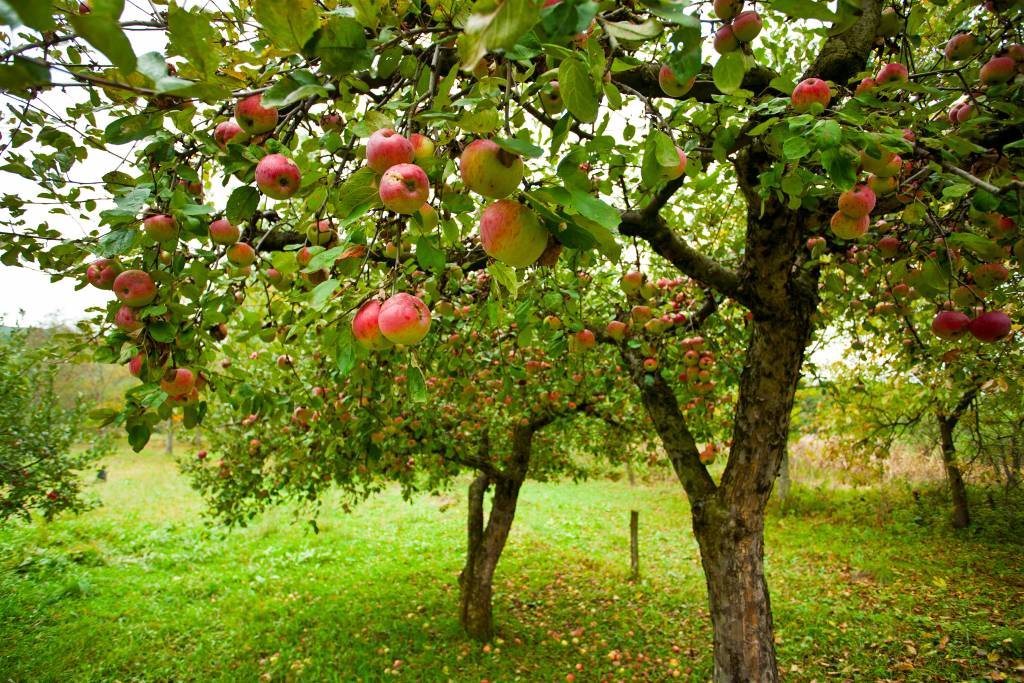
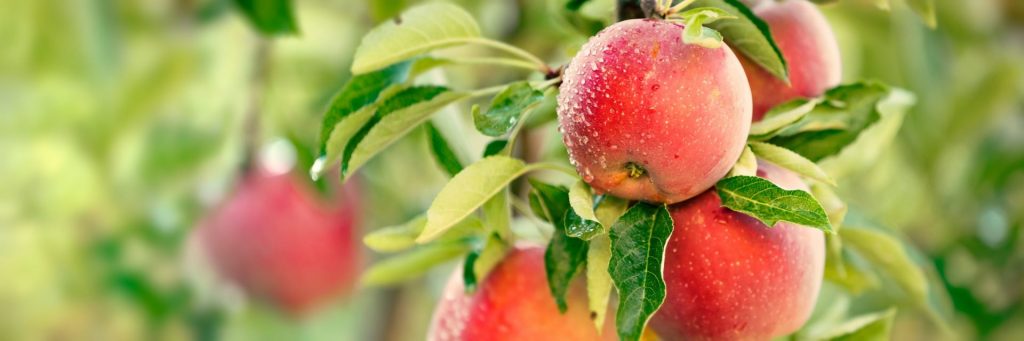
Buy your tree from a reputable source, choosing a cultivar that is proven successful in this region. Apple trees grow rapidly, so carefully consider where they will be planted: all fruiting trees require sunlight, ample space, and good soil conditions. Most apple cultivars are not self-fertile–to produce the best fruit results different cultivar should be planted within about 100ft. for cross-pollination.
Final height and spread will depend on onsite conditions, pruning and maintenance. Most apple trees are grafted cultivars.
Apple trees grow best with at least 6 hours of direct sunlight a day. Select a site that allows air movement and is protected from strong winter winds.
Apple Trees require well-drained, neutral soil (pH of 6-7), and we recommend testing your soil prior to planting. Here is the link to the U Mass’s Soil Testing Service.
Both container-grown and balled-&-burlapped (B&B) trees can be planted at any time during the growing season. Follow the proper planting guidelines published on the Weston Nurseries website. In addition:
All fruit trees benefit from maintaining several inches of mulch around their base to suppress weeds and also to discourage rodents that can damage trunk and roots.
All fruit trees should be given adequate water through the growing season.
Follow the recommendations from your soil test service, and in general, avoid adding fertilizer until the next growing season. Late fall or early spring is the proper time for fertilizing fruiting trees, using any formulation you choose, following directions on the label. Avoid fertilizing in summer.
Developing the proper branching framework is more important than encouraging fruiting when the tree is first planted. Consult a reliable reference book for pruning details to reduce the (unlikely) chances of big mistakes; and don’t be afraid to prune. It’s always best to prune in winter or early spring when the tree is dormant. Pruning tools should be sharp and cleaned with every use.
Here are some additional advantages of appropriate pruning:
Professional growers often physically reduce the number of fruit on their trees to help ensure better production, but for a home orchard, thinning immature fruit is an unnecessary bother. Recently planted trees should prioritize healthy vegetative growth rather than optimal fruit production. Mature fruit trees tend to naturally shed their excess fruit when properly maintained.
Copyright © 2025 Weston Nurseries. All rights reserved.
93 East Main Street
Hopkinton, MA 01748
(508) 435-3414
Daily 9am to 5pm
By The Yard
Mon – Fri 7am to 3pm
160 Pine Hill Road
Chelmsford, MA 01824
(978) 349-0055
Mon – Fri 8am to 5pm
Sat – Sun 9am to 5pm
1099 Main Street
Hingham, MA 02043
(781) 749-3773
Daily 9am to 5pm
339 South Great Road
Lincoln, MA 01773
(781) 259-8884
Daily 9am to 5pm