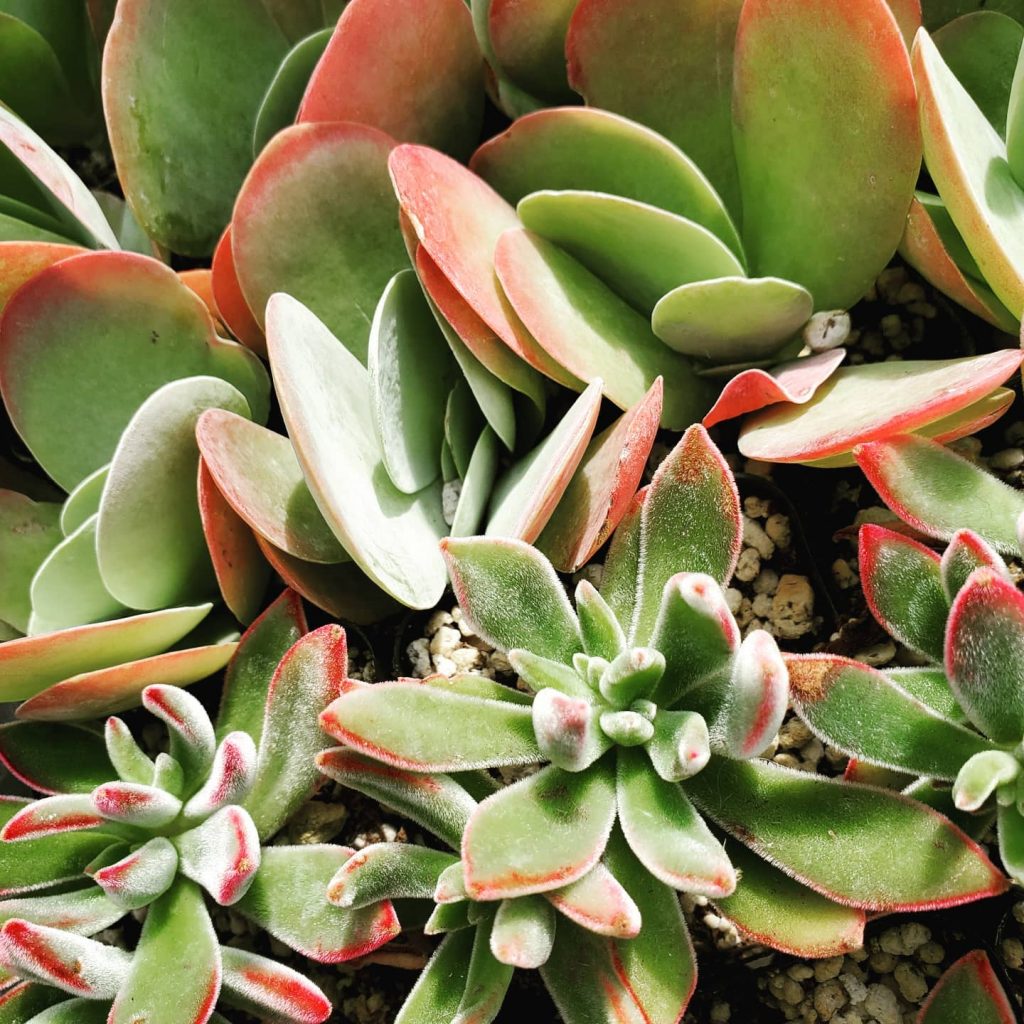
“Succulent” is a way of describing a plant and not a scientific or botanical name for a specific group of plants. All succulent plants have the ability to store water in their leaves, stems, or roots and are often noted for their thick, fleshy stems or leaves. Succulent plants represent many diverse families of plants and are found on every continent except Antarctica. They have evolved to grow in harsh climates where water may be scarce but are also found in forests, alpine, coastal and dry tropical areas, as well as in arid environments. Succulents are increasingly popular houseplants because they require minimal care, can tolerate low humidity, and come in quite an array of unique shapes, sizes and colors. Cacti have long been popular as low maintenance houseplants and they are considered a subset of succulents. A number of succulents are also well suited for the New England outdoor garden and like their indoor counterparts, they are popular for their unique appearance and ease of care.
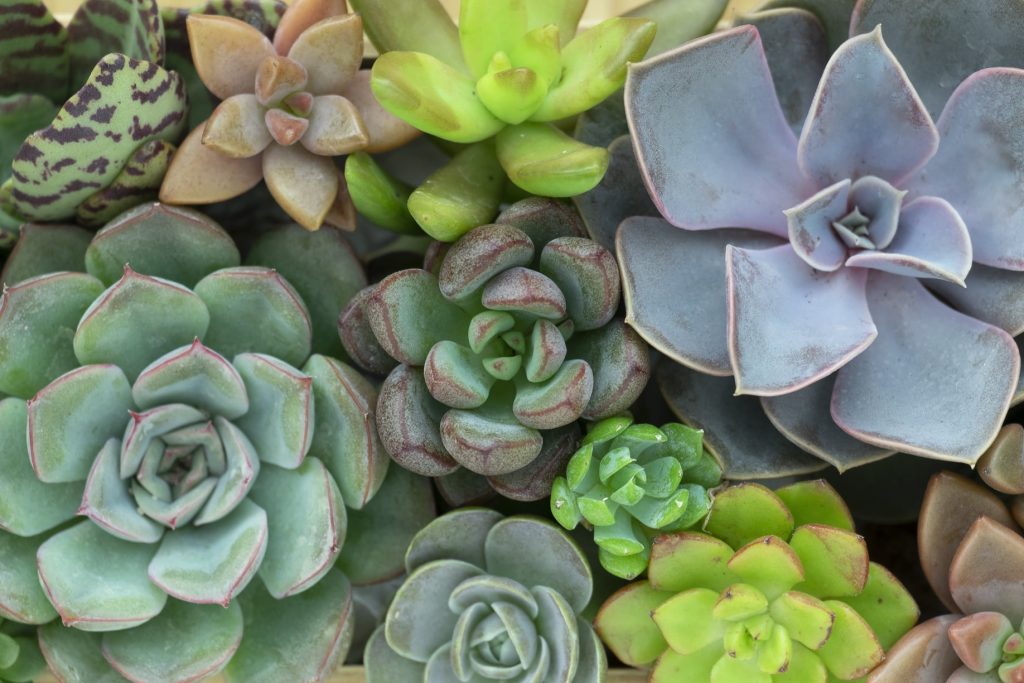
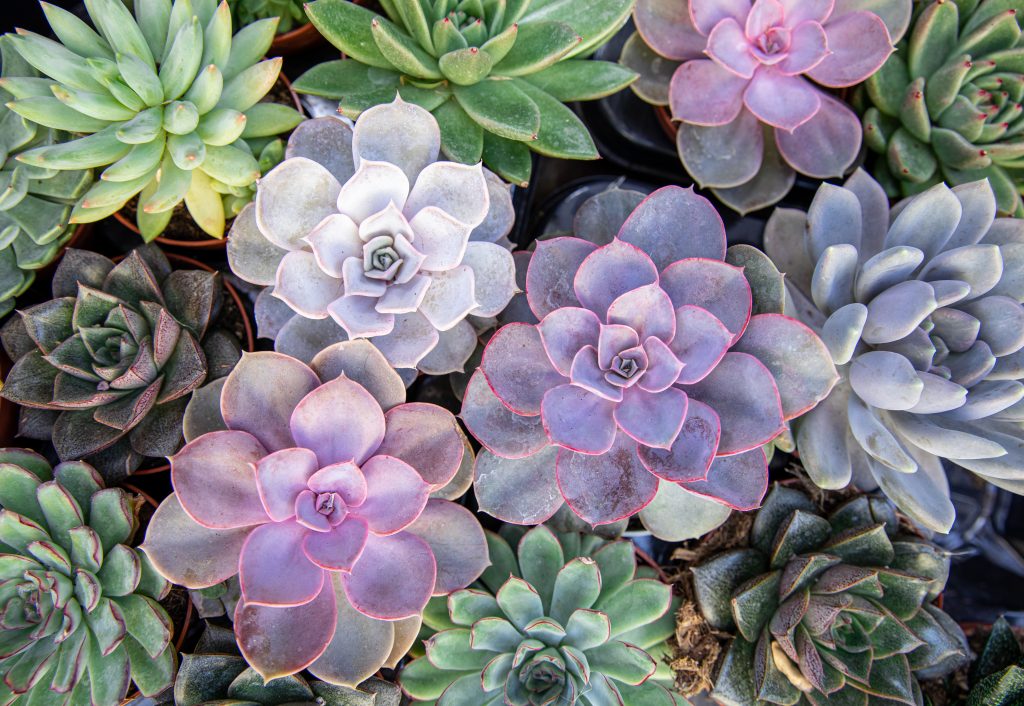
Small decorative succulents in pots.
Indoor Succulent care:
Most require 4-6 hours of bright light; southern exposure is ideal. Check your particular plant as not all can tolerate direct sunlight.
When repotting or planting, use a cactus potting mix. It is important that the potting mix is fast draining and does not remain soggy after watering. The Potting Bar at our Hopkinton and Chelmsford locations is available to help with all your potting needs.
Make sure to plant in a well-draining pot.
Allow potting mix to dry out between waterings, never let soil get soggy as this may lead to root rot.
In general, water lightly: more in summer and less in winter when dormant. Once every 4-6 weeks may be adequate in winter.
Fertilize lightly in summer when actively growing and not in winter when typically dormant.
In the winter, a succulent’s outer leaves may get brown and dry, then fall off. This is a normal process.
Propagation
Most succulent houseplants are easy to propagate.
By leaf:
Gently and carefully twist leaf off stem at the point where the stem and leaf meet.
Place the leaf flat on top of a pot of soil and place in bright but not direct sunlight.
Do not water until roots begin to develop, usually 3-4 weeks, and then water sparingly, only when dry.
A rosette will begin to develop in about 4 weeks. Do not separate baby rosette from leaf until the leaf shrivels and dies.
By offsets:
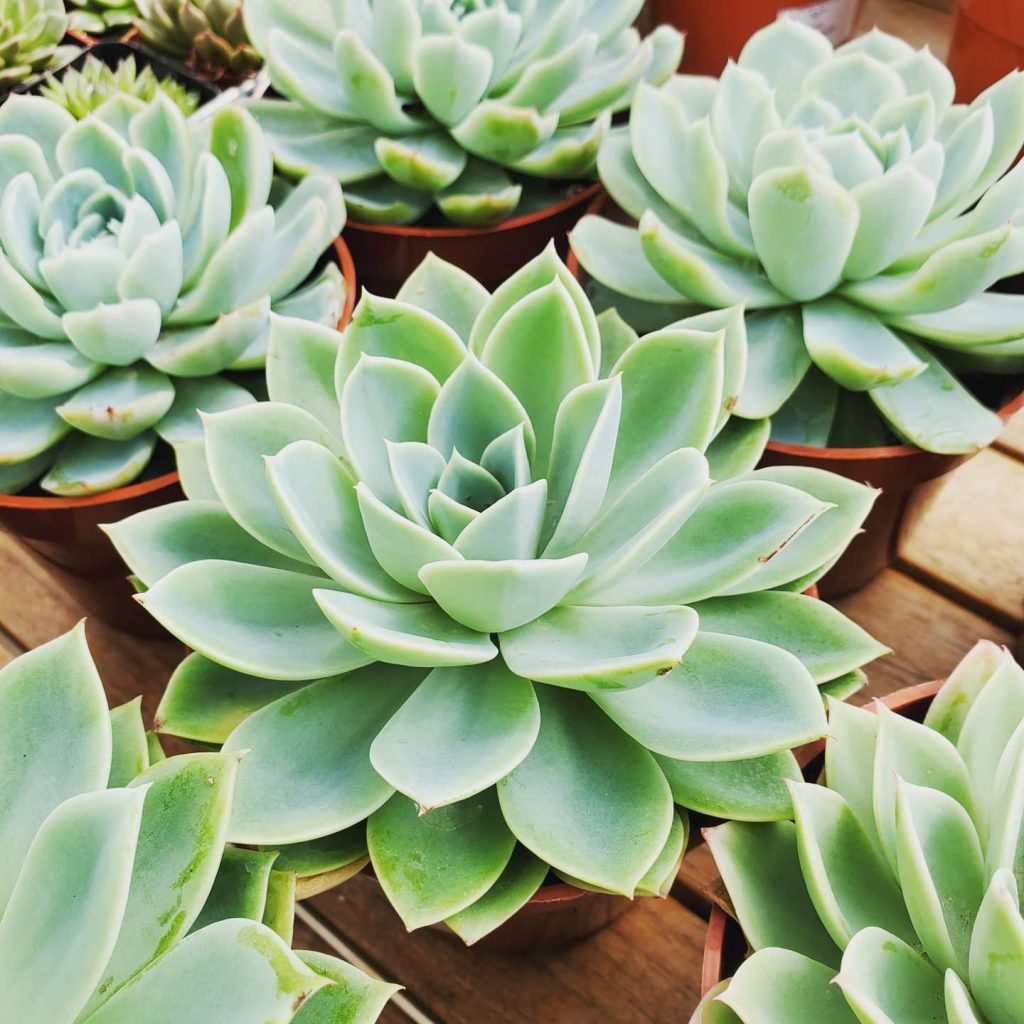
Some succulents, such as echeveria, will produce offsets which are essentially baby plants. Offsets can be planted directly in a well-draining pot, using a cactus potting mix.
Care for new plant in the same way as the parent plant.
By cutting:
Cut stem with sharp scissors or shears to the desired length and carefully twist off bottom 1/3 of leaves. Allow cut end to dry, at least 24-48 hours.
Fill well-draining pot with succulent/cactus potting mix.
Poke hole in soil and place stem in the hole so that it stands upright. Ensure that lower leaves are not touching the soil.
Do not water until roots begin to develop, then water sparingly, only when soil surface is dry.
It may take several months until you see signs of new growth.
Commonly available succulent houseplants:
Aeonium
Hoya
Agave
Kalanchoe
Aloe
Lithops
Cactus
Portulacaria
Crassula
Sansevieria
Echeveria
Sedum
Euphorbia
Sempervirum
Gasteria
Senecio
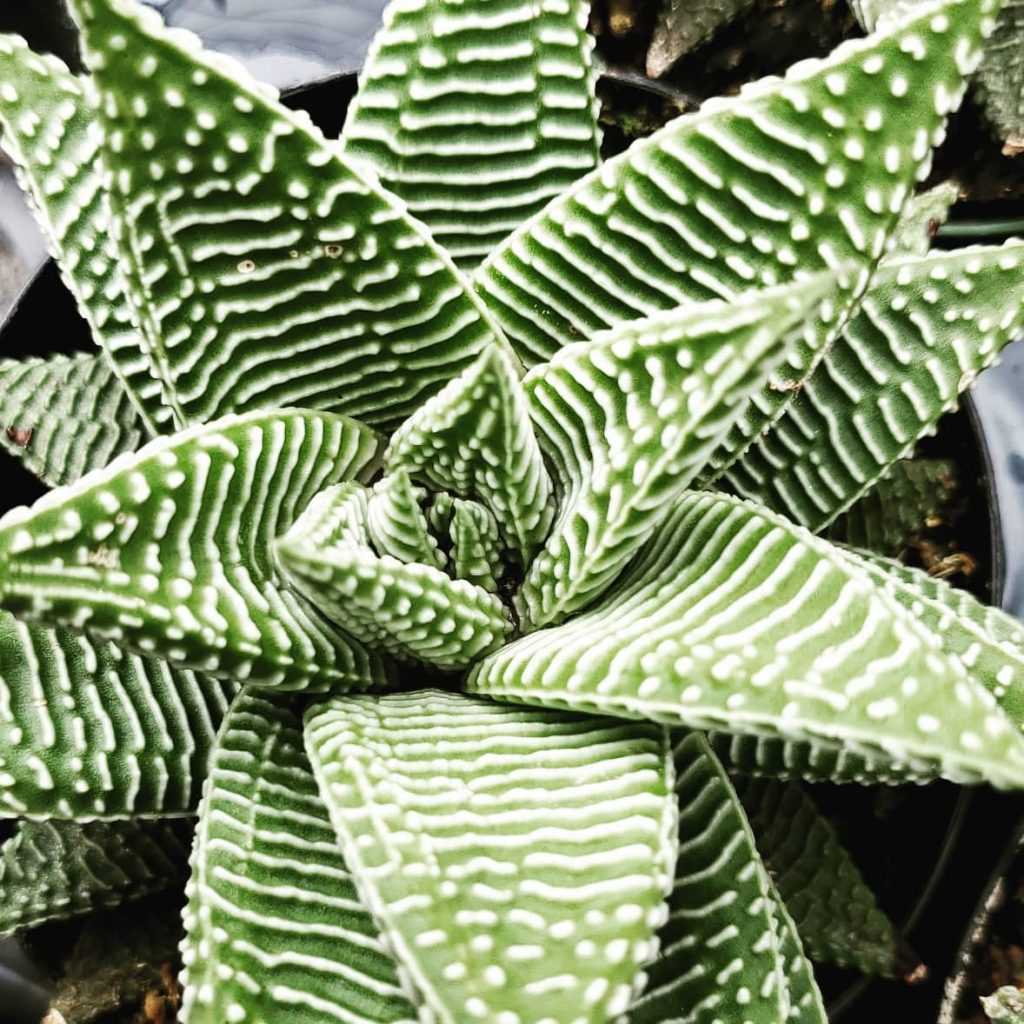
Haworthia
Common Problems:
We are always happy to discuss and help diagnose issues that you are having with your succulents.
The most common issue with succulent care is overwatering. Leaves appear swollen and are spongy. Stems may swell too. Leaves turn yellow and drop off. Stop watering until soil completely dries out.
Leaves that appear to shrivel, most frequently those at the top, can be a sign of underwatering. Increase watering frequency but be careful not to overwater.
If your plant is starting to appear leggy, it is probably not getting enough light. This is particularly common in the winter. Consider moving your plant to a sunnier location or try a grow light.
Dark spots on leaves indicates too much light.
Lower leaves often die as the plant grows. This is completely normal. Simply pull them off and dispose of them.
Pest: It is always best to isolate the affected plant to avoid spread to your other houseplants. Feel free to share a photo with us if you are unsure of what is infesting your plant.
Mealy bugs produce a white fluff, typically on the undersides of leaves or in the joints of the plant. Can be treated with rubbing alcohol or a dilute soap solution. May require weekly treatments until completely resolved.
Scale usually appears as small brown bumps on the plant.Physically remove these insects and then treat with rubbing alcohol or dilute soap solution as above. May require several weekly treatments.
Aphids can sometimes be removed by simply hosing them off the plant. Soapy water or neem oil sprayed directly onto the aphids and the undersides of leaves will kill insects. Repeat treatment weekly until resolved.
Early signs of spider mites are webbing or brown spots on your plants. Treat as you would mealybugs.
Cold Hardy Perennial Succulents:
Although most succulents are native to warmer climates, there are a few perennial succulents that will thrive outdoors in New England:
Sedum spp. (Stonecrop): Sedums range from groundcovers to large border perennials. They are sun loving, can withstand drought and neglect and can be grown in rocky or sandy soil, hillsides, or in containers as long as the soil drains well.
The groundcover or creeping sedum consists of low growing succulent leaves ranging from green to blue gray to reddish bronze and generally have small blooms of five-petaled flowers in yellow, white, or pink. Creeping sedum is a great choice for rock gardens and stone walls as they thrive with poor or little soil.
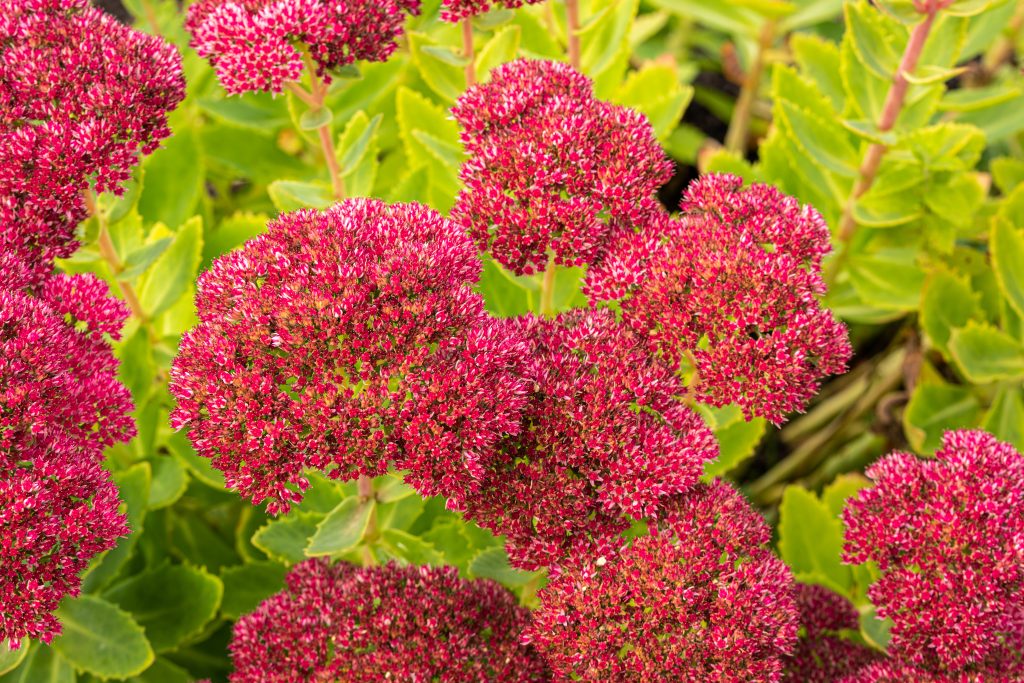
The upright, border perennial sedum are generally 1-2 feet tall with green or bluish or red/purple foliage and topped by domed flowerheads consisting of many tiny flowers. Although green buds appear in the spring, their stunning beauty is not fully revealed until they begin to flower in the late summer and early fall. The flowers get richer and deeper in color as weather cools.
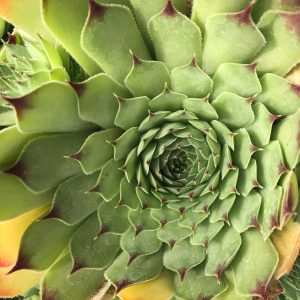
Sempervivum spp. (Hens and Chicks): These low growing evergreen succulents, native to Europe and North Africa, grow in rosettes from .25 to 10 inches in diameter and come in a variety of colors from greens to bronze to purples and reds. The mother rosette (hen) will spread via horizontal stems to form offsets(chicks). The hens may flower when mature and will then die back, leaving the chicks to fill in. Remove dead rosettes after flowering. Prefers full sun, will thrive in poor soil as long as it is well-draining. Drought tolerant and deer resistant. Great for rock gardens, cracks in rock walls, spaces between pavers, groundcover.
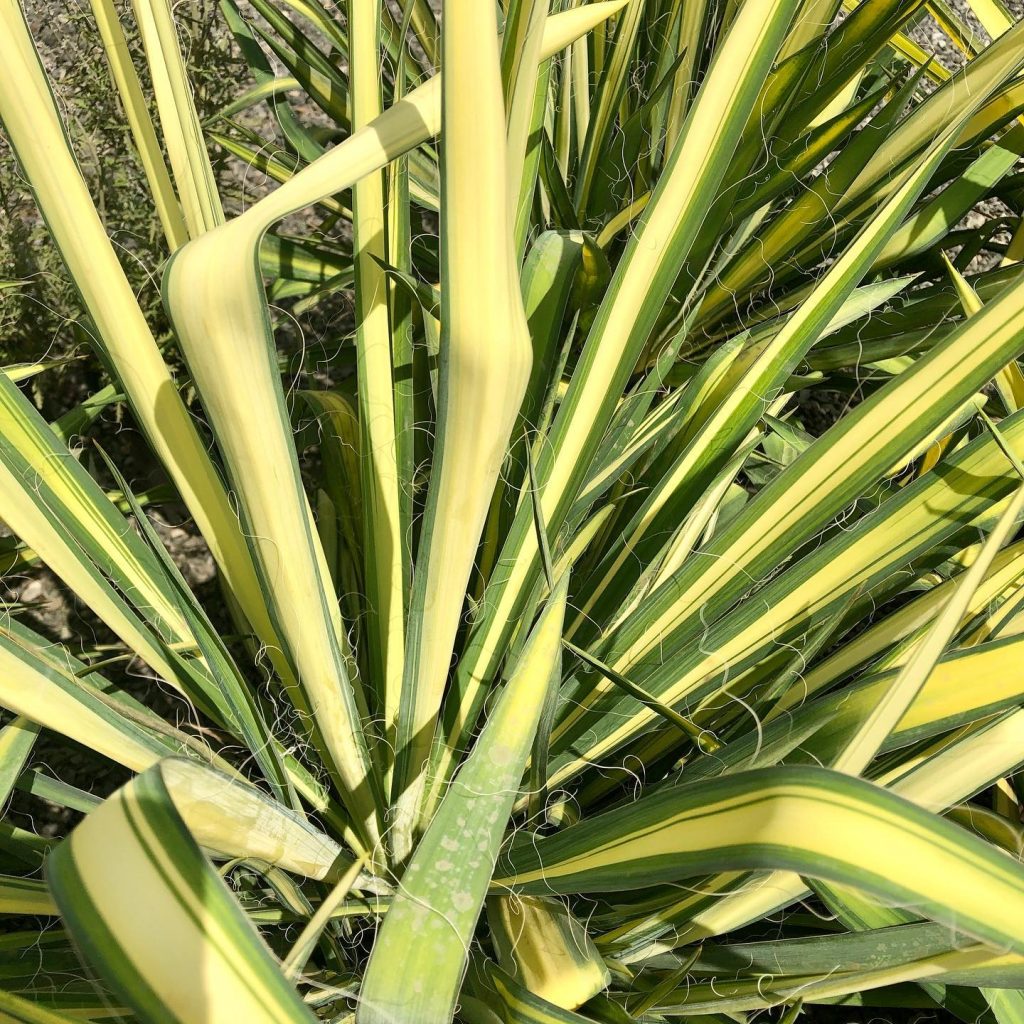
Yucca filamentosa(Adam’s Needle): Although this yucca looks like a perennial, it is actually broadleaf evergreen shrub. A 5 to 8 ft. stalk arises from the center of the rosette of sword-shaped, spine-tipped leaves in late spring which is topped by bell shaped white blooms in June and July. Best grown in well-drained soil in full sun but will tolerate part shade. Tolerates sandy soil, heat, drought and salt. Rabbit and deer resistant.